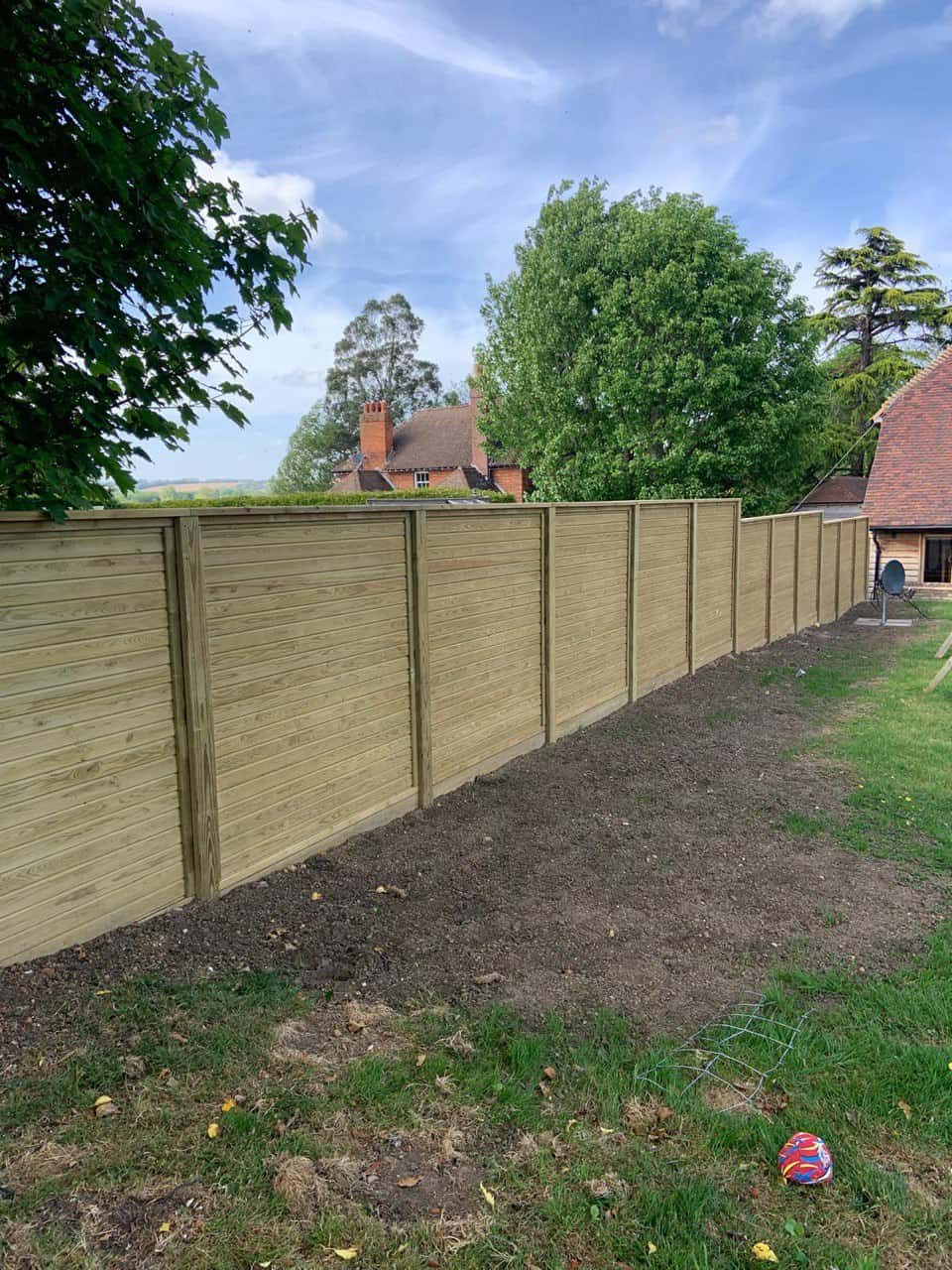
How Acoustic Fencing Can Help Reduce Noise Around Your Property
Unwanted noise can make it difficult to relax in your garden, enjoy outdoor spaces or maintain privacy around your home. Traffic, nearby activity and sounds from neighbouring properties can all affect how comfortable an outdoor area feels. While some noise cannot be eliminated entirely, installing suitable acoustic fencing can help reduce the amount of sound reaching your property.
Acoustic fencing is designed to act as a physical barrier between a noise source and the area that needs protection. When properly selected and installed, it can help create a quieter and more comfortable outdoor environment. For homeowners in Edenbridge, Kent, understanding how acoustic fencing works can help when deciding whether it is a suitable improvement for their property.
What Is Acoustic Fencing?
Acoustic fencing is a specialist type of boundary fencing designed to reduce the transmission of sound. Unlike standard garden fencing, which is primarily intended to mark boundaries and provide privacy, acoustic fencing uses carefully constructed panels to create a more effective sound barrier.
These panels are generally made from dense materials and designed with minimal gaps between sections. Their purpose is to block or reduce sound travelling directly through the fence rather than allowing it to pass through open spaces.
The effectiveness of an acoustic fence depends on several factors, including its height, construction, positioning and the type of noise involved. A properly designed installation considers the surrounding environment rather than relying on the fencing material alone.
How Acoustic Fencing Reduces Noise
Sound travels through the air in waves. When these waves encounter a solid barrier, some sound energy is reflected, while some may be absorbed or transmitted through the material.
Acoustic fencing helps reduce direct sound transmission by providing a continuous, dense barrier. The heavier and more solid the construction, the more effectively it can generally limit sound passing through the fence.
However, noise can still travel over the top of a barrier or around its ends. This means the positioning and height of the fence are important considerations. A fence that is too short or contains significant gaps may provide limited improvement.
For this reason, acoustic fencing should be planned around the location of the noise source and the areas where noise reduction is most important.
Common Situations Where Acoustic Fencing Can Help
Acoustic fencing can be useful in a range of residential settings where unwanted noise affects outdoor comfort.
Some common examples include:
- Road traffic: A suitable acoustic barrier can help reduce direct traffic noise reaching gardens close to busy roads.
- Neighbouring properties: Solid fencing may help limit some everyday sounds travelling between adjoining gardens.
- Commercial activity: Properties near areas with regular business or operational noise may benefit from additional boundary screening.
- Outdoor equipment: Fencing can help reduce the direct transmission of noise from machinery and other equipment, depending on the source and installation.
The results will vary according to the noise level, distance, surrounding buildings and layout of the property. Acoustic fencing is generally most effective when it blocks the direct path between the source of the noise and the area being protected.
Why Fence Height and Position Matter
Choosing the correct height and position is essential when installing acoustic fencing. If sound can travel easily over the top of the barrier, the improvement may be limited.
A taller fence can help interrupt the direct sound path, particularly when it is positioned close to the noise source or the area requiring protection. However, the most suitable arrangement depends on the property’s layout and the direction from which the noise travels.
The fence should also extend far enough along the boundary to reduce sound travelling around its ends. Leaving gaps between panels, beneath the fence or around gates can create openings through which noise may pass.
A professional assessment helps determine how the fencing should be positioned to provide the most practical result.
The Importance of Solid Construction and Proper Installation
Acoustic fencing needs to form a consistent barrier. Even high-quality panels may perform poorly if they are installed with gaps or are not securely supported.
The materials used should provide sufficient density, while the joints between panels need to be fitted carefully. Posts and foundations must also be suitable for the fence’s height, weight and exposure to weather.
Proper installation helps maintain the barrier’s structure over time. It also reduces the likelihood of panels becoming loose or developing openings that could affect their noise-reducing performance.
An experienced fencing contractor can assess the boundary and recommend a suitable system based on the property’s requirements.
Acoustic Fencing and Garden Privacy
An additional benefit of acoustic fencing is the privacy it can provide. Its solid panels help screen the garden from neighbouring views, creating a more enclosed outdoor space.
This can make gardens more comfortable for relaxing, entertaining guests or spending time with family. The finished appearance can also be selected to complement the property’s surroundings, helping the fencing serve both practical and visual purposes.
Although privacy and noise reduction are different functions, acoustic fencing can address both when the design is appropriate.
Is Acoustic Fencing Suitable for Every Property?
Acoustic fencing can make a noticeable difference in suitable conditions, but it is not a complete solution to every noise problem. Low-frequency sounds, reflected noise and sound travelling over nearby buildings may be more difficult to control.
The available space, boundary layout, ground levels and location of neighbouring properties can all influence the results. It is therefore important to consider the specific noise problem before choosing a fencing system.
Professional advice can help establish whether acoustic fencing is appropriate and identify the most suitable design for the property.
Conclusion
Acoustic fencing offers a practical way to reduce direct noise transmission while improving privacy around a property. Its effectiveness depends on solid construction, suitable height, careful positioning and professional installation.
For homeowners in Edenbridge, Kent, Fast Fix Fencing Edenbridge can help assess boundary requirements and provide suitable fencing solutions. If unwanted noise is affecting your garden or outdoor space, contact Fast Fix Fencing Edenbridge to discuss whether acoustic fencing could be a suitable option for your property.
Call us on: 01732 904 091
Click here to find out more about Fast Fix Fencing Edenbridge
Click here to complete our contact form and see how we can help with your fencing needs.